
All Sensex components ended in green, with Bajaj Finserv, HCL Tech, Bharti Airtel, IndusInd Bank, L&T, TCS, ONGC and ICICI Bank, Bajaj Finance and SBI gaining up to 6.64 per cent.

The S&P BSE Sensex ended higher by 464 points or 1.95% at 24,243.

RCap had proprietary investment book of Rs 2,000 crore (Rs 20 billion) as on end-March and owns stake in a host of companies.

Equity markets rallied after softer-than-expected inflation data in the US and UK rekindled hopes of the end of the rate-hiking cycle by major central banks. The soft inflation reading drove down bond yields and the US dollar, whetting the appetite for risky assets. The 10-year US bond yield fell below 4.5 per cent after topping 5 per cent less than a month ago.

ONGC was the top loser in the Sensex pack, shedding 4 per cent, followed by Bharti Airtel, SBI, IndusInd Bank, NTPC, Sun Pharma and ITC. On the other hand, Bajaj Finance, Bajaj Auto, Reliance, Bajaj Finserv and Asian Paints were among the gainers.

In four days, Sensex has fallen by 5,815.25 points. From the 30-share pack, 22 companies closed the day lower, led by Bajaj Finance, Maruti Suzuki India, Axis Bank, M&M, Tech Mahindra and ONGC, plunging up to 10.24 per cent.

The NSE Nifty ended flat at 2807. The market breadth was marginally positive at close - out of 2,569 stocks traded, 1,245 advanced and 1,219 declined.

All nine Adani stocks saw a rise in their share price in H1FY23, ranging from 6.1% in case of Adani Ports to 102% in case of Adani Power.

Sebi's move to curb volatility didn't work for the market as rules were applicable for both long and short positions which makes difficult new long positions while short positions caused more price damage due to lack of liquidity.
The NSE Nifty ended at 2920, up 77 points. The market breadth was fairly positive - out of 2,552 stocks traded, 1,549 advanced, 921 declined and the rest were unchanged on Monday.

Losses largely came from the metal index, followed by power, infrastructure, realty, PSU, oil and gas, capital goods, FMCG, healthcare, auto and banking.

With sales of cooling products turning out dismal this summer due to unseasonal rains, the stocks of related companies are now off their March highs. Shares of fan and air conditioner makers such as Voltas, Symphony, Orient Electric, Johnson Controls-Hitachi Air Conditioning and Crompton Greaves are down 5-23 per cent since March when the summer season saw a firm onset. In comparison, the BSE Sensex index is up 10 per cent.
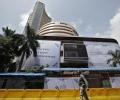
Gains were led by realty, auto, capital goods, banking, infrastructure, metals, power, oil & gas, PSU and consumer durables sectors, which rose up to 3.30 per cent.

The share of listed public sector undertakings (PSUs) in the overall market capitalisation has hit a three-year high of 11.4 per cent. This comes on the back of the sharp outperformance of the PSU pack over the past two years. In 2021 and 2022, the BSE PSU index gained 41 per cent and 23 per cent, respectively. Market participants said a combination of factors like value buying and bullishness, particularly in public sector banks (PSBs), were the reason for the improved prospects.

The broader 50-issue NSE Nifty dropped 38.35 points, or 0.38 per cent, to close at 10,186.60
Unabated selling in realty, financial and capital goods stocks saw the index slide to a low of 14,687 - down 406 points from the previous close. The BSE Realty index slumped 8% (447 points) to 5,164. The Bankex tanked 5% (368 points) to 6,903, and the Capital Goods index shed 3.7% (468 points) at 12,139.

The S&P BSE Small-cap index has recovered 26 per cent as compared to a 23 per cent rise in the S&P BSE Sensex.

ICICI Bank was the top gainer in the Sensex pack, rising over 3 per cent, followed by ITC, SBI, HCL Tech, Axis Bank, Bajaj Finserv and Tech Mahindra. NSE Nifty advanced 32 points to 15,856.05.

The BSE benchmark Sensex rose 192 points to end at 39,250 on Sunday as investors built up fresh positions in the special Muhurat trading session to mark the beginning of Hindu Samvat year 2076.

Investor sentiments remained upbeat tracking global developments as the US, China geared up for trade talks due this week.

Tata Steel was the top gainer in the Sensex pack, rallying nearly 4 per cent, followed by Bajaj Finance, M&M, Bajaj Finserv and Reliance Industries. NSE Nifty advanced 33.95 points to a fresh high of 16,563.05.
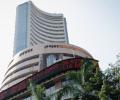
L&T, ONGC and banking scrips power gains in today's trade

Experts say, investors will be better off exiting them at higher levels and investing in stocks of fundamentally sound companies.

Tech Mahindra was the top gainer in the Sensex pack, jumping over 5 per cent, followed by Bajaj Finance, Bharti Airtel, Bajaj Finserv, L&T, Tata Steel and Infosys. NSE Nifty surged 191.95 points to 15,824.05.

The index rising for the fourth straight session surged 564 points.

The top losers from the Sensex pack are ONGC, Coal India, Vedanta, Reliance Inds and L&T.
HCL Tech was the top gainer in the Sensex pack, rallying over 5 per cent, followed by L&T, Tech Mahindra, HDFC Bank, UltraTech Cement, ITC and Tata Steel. NSE Nifty rose 70.25 points to its all-time high of 15,924.20.

Equity indices gave up early gains to close in the red for the third session on the trot on Wednesday, weighed by selling in banking and finance counters amid inflationary pressures and persistent foreign fund outflows. A weak rupee and lacklustre global cues also kept buying sentiment in check, traders said. The 30-share BSE Sensex opened on a firm footing but failed to hold on the momentum, finishing 237.44 points or 0.41 per cent lower at 58,338.93. On similar lines, the broader NSE Nifty dipped 54.65 points or 0.31 per cent to close at 17,475.65.

Dr Reddy's was the top gainer in the Sensex pack, rising over 3 per cent, followed by PowerGrid, TCS, HCL Tech, Infosys and Reliance Industries. On the other hand, L&T, IndusInd Bank, Bajaj Finserv and Bharti Airtel were among the laggards.

Equity benchmark Sensex rebounded 454 points on Thursday, boosted by gains in index heavyweight Reliance Industries amid a positive trend in global markets.

n the broader market, BSE Midcap and Smallcap indices are trading higher by 0.3% each.

Markets finished the session on a dismal note with Sensex closing at its lowest level since August 2014.

Stocks of defence-related companies have been firing on all cylinders on the bourses in calendar year 2023 (CY23). Shares of Hindustan Aeronautics (HAL), Bharat Electronics (BEL), Bharat Dynamics (BDL), Data Patterns, MTAR Tech, Cochin Shipyard and GRSE have rallied in the range of 21-96 per cent so far this year. By comparison, the BSE Sensex is up 8 per cent. The gains have been sustained on the back of robust export opportunities, a healthy project pipeline and the government's continued push for local manufacturing and indigenisation of defence equipment.
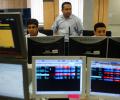
L&T was the top gainer in the Sensex pack, rallying 4.81 per cent, followed by M&M, Sun Pharma, Tech Mahindra, NTPC, SBI, ICICI Bank and Titan.

Market benchmarks gave up intra-day gains to close in the red for the sixth session on the trot on Friday, capping a bruising week which saw a massive dash for safety amid rate hikes by global central banks and fears of slowing growth.

UltraTech Cement was the top loser in the Sensex pack, shedding around 3 per cent, followed by M&M, HDFC Bank, IndusInd Bank, Axis Bank and Reliance Industries. NSE Nifty fell 50.80 points or 0.38 per cent to 13,478.30.

The 30-share Sensex ended up 165 points at 29,044 and the 50-share Nifty gained 54 points to close at 8,834.

Benchmark share indices trimmed intra-day gains after global crude oil prices resumed their downward trajectory after sharp gains on Friday.

'The market should maintain optimism on the back of range-bound oil prices, a robust fiscal balance sheet, a better-than-expected monsoon, and moderating inflation.'
Mid- and small-cap indices have outperformed the frontline benchmarks - the S&P BSE Sensex (up around 10 per cent) and the Nifty50 (13 per cent) - in the first half of calendar year 2021 (H1-CY21) by rallying 26 per cent and 39 per cent, respectively. The trend, analysts believe, is likely to continue in H2-CY21 as well. The outperformance in H1-CY21 comes on the back of improved earnings and strong inflows from the foreign portfolio investors (FPIs) in Indian equities. However, good monsoon so far, gradual opening up of the economy and the pick-up in the pace of vaccination provides support to the market.
 © 2026 Rediff.com - Advertise with us - Disclaimer - Privacy Policy - Sitemap - Feedback - About us - Terms of use - Grievances